
Total Solutions Fire Detection
& Protection Systems
Design Consultant
We Proline systems, we offers design and engineering services to commercial and industrial facilities against the threat of fire, ensuring the safety of personnel and assets. We are expert engineers specializes in the design and implementation of comprehensive fire protection systems, including detection and suppression systems.
Turnkey Contractor
We offer Turnkey solutions for Fire Alarm, Fire Hydrant, Sprinkler, Fire Suppression, Fire Extinguishers for Industrial and Commercial market segments. we designed and successfully commissioned several Fire Protection and Fire Alarm Systems, Detection system and Security Systems etc.
Fire Alarm & Detection System
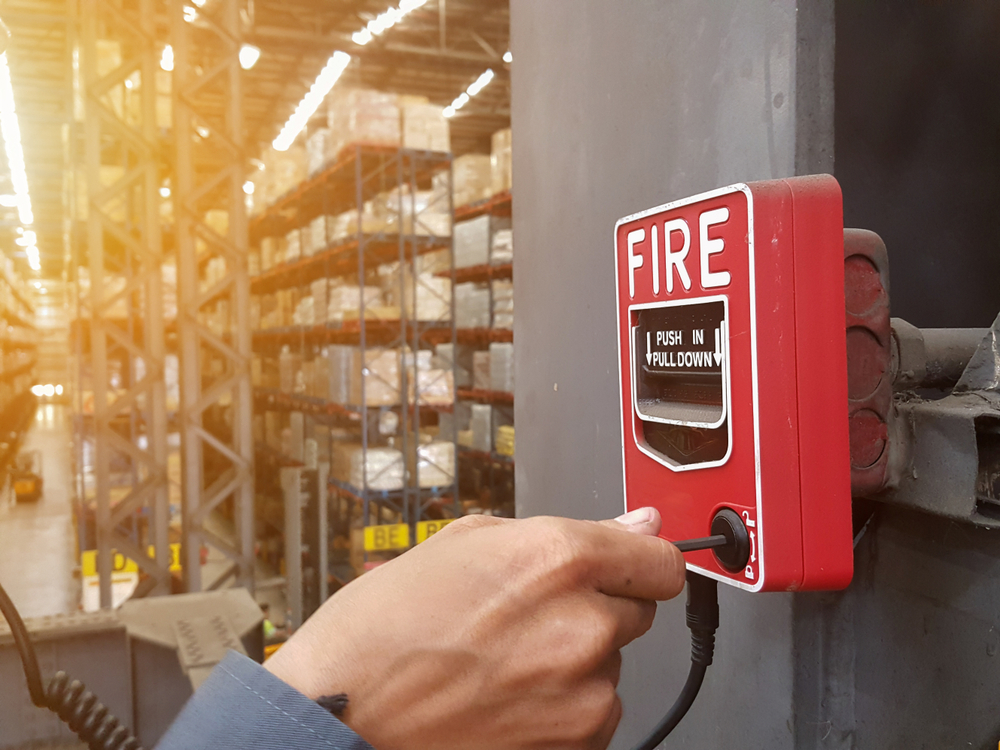
Fire Alarm & Detection System
We offer complete solutions as Designing, Supply, Erection & Commissioning of Fire alarm systems using both Addressable and Conventional Smoke and Heat Detectors with the option of Beam Detectors plus Addressable and Conventional Manual Call Point, sounders, sounder beacons and Aspiration Smoke Detection System.
Intelligent Addressable Fire Alarm System
Addressable Systems offer benefits in terms of speed of detection, identification of the location of fire and easier maintenance. Intelligent systems also offer tolerance to faults in the system wiring, which allows a single pair of wires to be used to connect up to 300 devices to the system, all owing cost savings in the wiring of large systems. In larger installations, the benefits of improved maintenance and reduced cabling cost are overwhelming. The price difference between intelligent and conventional systems has narrowed to such an extent that even for small installations, the use of intelligent fire alarm system should be considered.
Aspiration Smoke Detection System
An aspirating smoke detector (ASD) is a system used in active fire protection, consisting of a central detection unit which draws air through a network of pipes to detect smoke. The sampling chamber is based on a nephelometer that detects the presence of smoke particles suspended in air by detecting the light scattered by them in the chamber. ASDs can typically detect smoke before it is visible to the naked eye.
Fire Hydrant & Sprinkler System

Fire Hydrant & Sprinkler System
A proper Hydrant System ensures an adequate, uninterrupted water supply, under sufficient pressure, at all strategic points of a building/factory in such a way that the fire is attacked immediately, with minimum loss of time and with maximum efficiency. Automatic Fire Sprinklers are an essential element of Fire Protection as it is designed to both detect & extinguish fire. A properly designed and maintained automatic fire sprinkler system can significantly reduce property damage as well as protect lives.
Fire Hydrant System
The Fire Hydrant Line is always kept pressurized with water. In the event of any minor pressure drop in the system, the pressure reaches the preset pressure setting for Jockey pump, the Jockey pump will start automatically to compensate the pressure differential. In the event of opening one or more hydrant valve for fighting fire the Jockey pump will not be able to make up this water loss resulting in further pressure drop. When the falling pressure reaches the Preset pressure for main pump, the main pump will start automatically. In case of electric supply failure, stand by diesel engine driven pump will come into operation.
Sprinkler system
An automatic sprinkler system is intended to detect, control and extinguish a fire, and warn the occupants of occurrence of fire. The installation comprises fire pumps, water storage tanks, control valve sets, sprinkler heads, flow switches, pressure switches, pipe work and valves. The system operates automatically without human intervention.
Each sprinkler head contains a glass bulb or a fusible link. The bulb contains a liquid and a quantity of vapour. The liquid expands under the influence of heat as do the fusible link heads. When the temperature reaches a certain level – typically at 68 Degree Centigrade – it will expand the liquid and break the bulb or fusible link, which in turn releases water directly onto the seat of the fire.
High/Medium Velocity Water Spray System
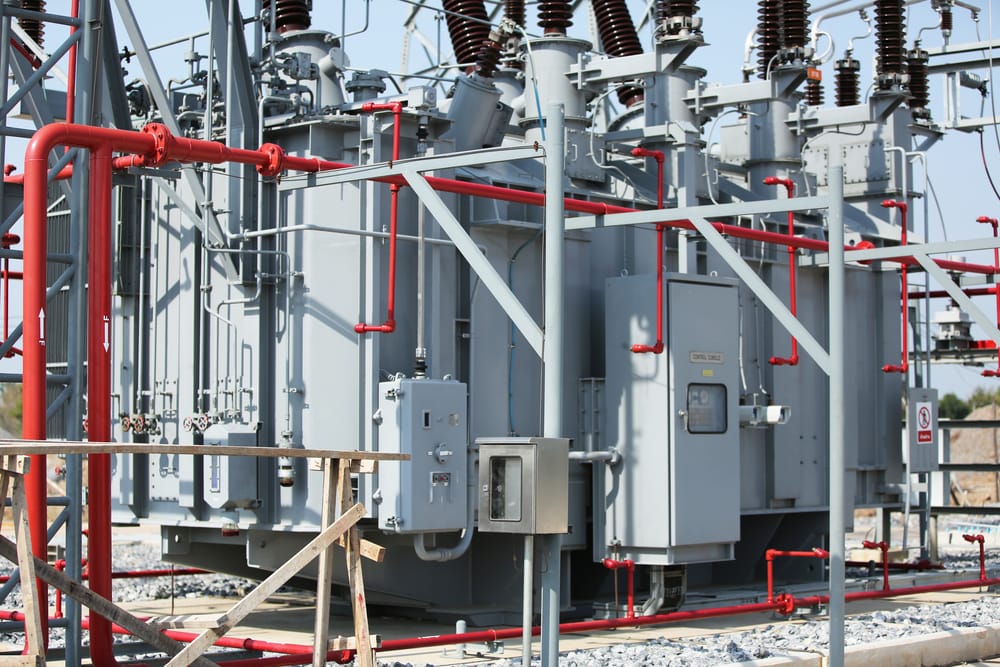
High/Medium Velocity Water Spray System
HVWS and MVWS are two types of fire protection systems commonly used in industrial and commercial settings. Let’s explore what these systems stand for and how they differ:
HVWS System
(High Velocity Water Spray System):
The High Velocity Water Spray System is designed to provide rapid fire suppression and cooling in areas where flammable liquid fires may occur, such as oil refineries, chemical plants, and fuel storage facilities. It utilizes a high-velocity water spray to extinguish the fire and prevent its spread.Water is discharged through specially designed nozzles at high pressure and velocity. The system uses a substantial amount of water to deliver a dense spray pattern, effectively absorbing heat and suppressing the fire.
MVWS System
(Medium Velocity Water Spray System)
The Medium Velocity Water Spray System is primarily used for fire protection in certain types of hazards, such as transformers, switchgear rooms, cable tunnels, and generator rooms. It provides a controlled application of water spray to prevent fire propagation and protect critical equipment.
Both HVWS and MVWS systems use water as the primary extinguishing agent, but they differ in terms of the discharge velocity and application method. HVWS systems provide a higher-velocity water spray for rapidly suppressing large flammable liquid fires, while MVWS systems deliver a medium-velocity spray for localized protection in specific areas or equipment.
Gas based Fire Suppression System

Gas based Fire Suppression System
Gas Suppression Systems are generally used in concealed rooms. The principle used by Gas Suppression System is by breaking the Fire Triangle, the fire ceases to exist. In the room, protected by Gas Suppression System, there are various detectors placed at various locations. Each detector constantly monitors the room for signs of fire. As soon as fire is detected, an alarm is sounded, to the personnel to evacuate the entire room. Then, the a gas like, Novec, Clean Agent or Co2 is released in the enclosed room. Thus, the oxygen in the room is rapidly reduced, to a level where fire cannot exist. However, living organisms remain unharmed, because of the gas. Because of such a system, all the delicate or critical items remain untouched and unharmed by fire or water.
Kitchen Suppression System
Systems use a proprietary continuous linear sensor tube that reliably detects and actuates release of the extinguishing agent using pneumatic technology. It is more flexible, space efficient and cost effective versus alternative mechanical or electronic systems. It provides simple reliable protection for Kitchen hoods.
Automatic Clean Agent Tubing System
Automatic Clean Agent Tubing System is an innovative automatic fire suppression system designed to provide a fast and reliable solution to extinguish panel & cabinet fires and help protect electrical panels. With the modern dependency on systems required being live, any interruptions in operations can involve huge financial costs and impact businesses severely. Therefore it is essential that special attention is paid to effective fire protection for these electrical installations ensuring you can achieve ideal protection for your equipments.
FIRE EXTINGUISHERS
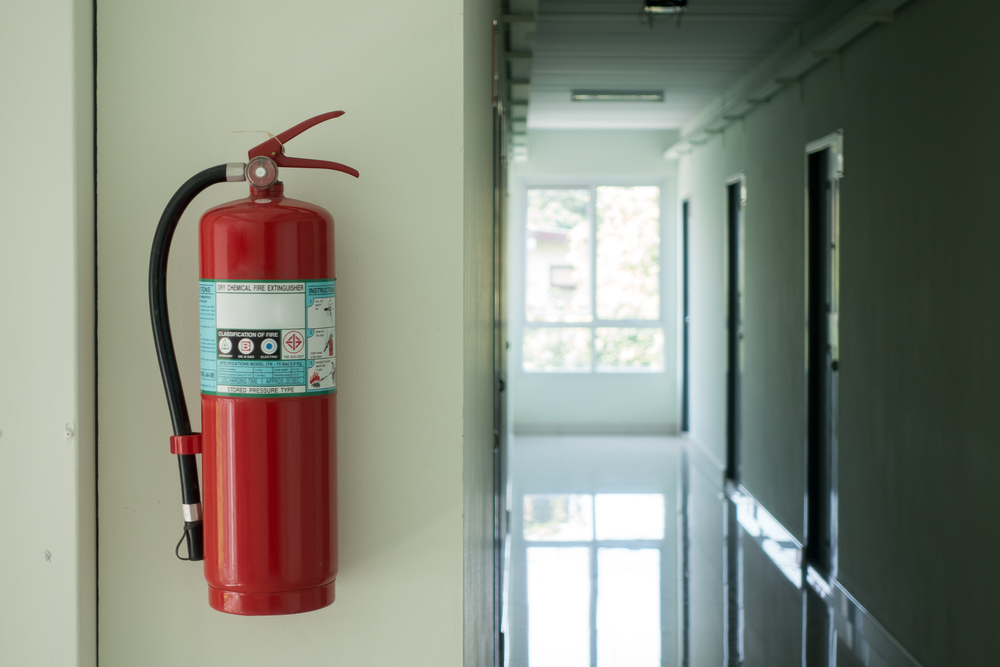
FIRE EXTINGUISHERS
We offers Multi Purpose Dry Chemical Powder Type Fire Extinguisher inline with requirement and as per designed guideline
ABC Dry Powder Fire Extinguisher
ABC Dry Powder extinguisher that can be used on different types of fire. This type of extinguisher is described as multipurpose for this reason. This type of extinguisher extinguishes the fire by covering the affected area with a dry powder and acts in a similar way to a fire blanket or sand. The fire is extinguished, due to the lack of oxygen.
CO2 Fire Extinguisher
The correct type of extinguisher to use on an electrical fire would be a CO2 type extinguisher. This type of extinguisher works by displacing the oxygen near the fire and this, in effect, smothers the fire. You will usually find a CO2 extinguisher 2kg or 4.5kg, not too far away from electrical equipment. CO2 extinguishers jet out the CO2 at high velocity and you may see particles of dry ice as the mist jets out. The big advantage of using this type of extinguisher on electrical equipment is that it does not leave any residue and therefore, does not usually damage sensitive electrical equipment such as computers.
Foam Fire Extinguisher
As the name suggests, the extinguisher is filled with a liquid and a chemical that when released creates a foam discharge. The foam smothers the fire and starves the fire of oxygen. Not only can a foam extinguisher be used on combustible A Class fires, which are wood, paper, cloth etc. However, it can also be used on flammable liquid type fires.
Clean Agent Fire Extinguisher
Clean Agent portable fire extinguishers are used to protect the contents of the structure, high-value assets, and business continuity. These clean agent portable fire extinguishers are safe for people, safe for assets, and environmentally preferred. Clean Agent portable fire extinguishers are safe for use on Class A, B, and C fires. The clean agent portable fire extinguishers contain FE36 agents that are electrically non-conductive and non-corrosive. There is no residue left behind. It’s business as usual with no collateral damage.
Foam Flooding System
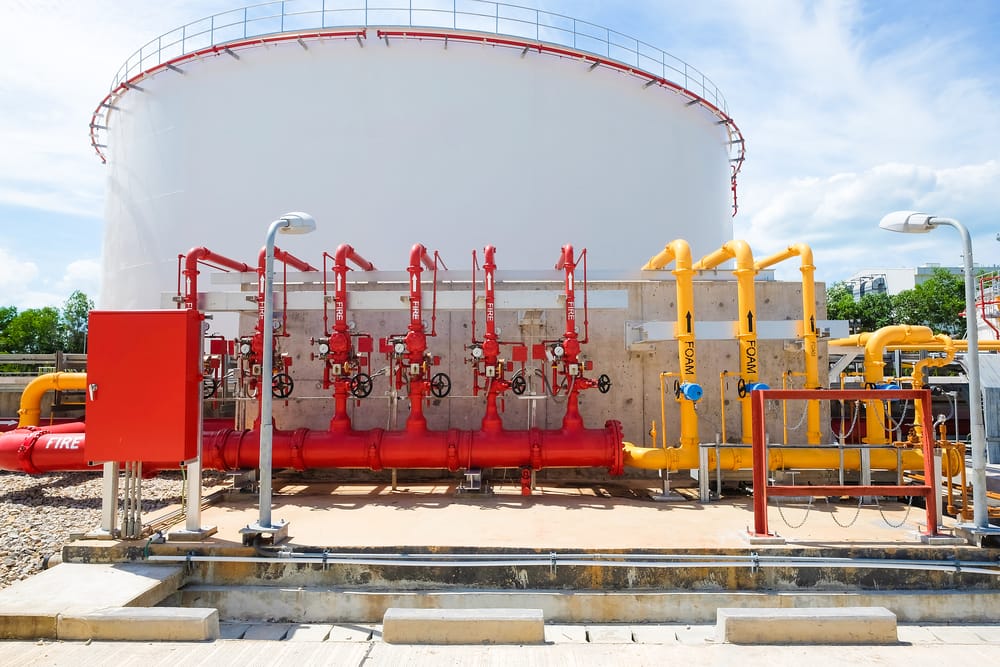
Foam Flooding System
The foam flooding system functions on similar principles as above and is a special system of pipe connected to a source of foam concentrate and to water supply. The system uses appropriate discharge devices to control and extinguish fires which require smothering and cooling agent. It is designed to distribute a foam-water solution to a specific hazard area such as extraction plants, air craft hangers and areas where flammable liquid spill fires may occur.
Foam is an aggregate of air-filled bubbles formed from aqueous solutions which is in lower density than flammable liquids. It is used principally to form a cohesive floating blanket on flammable and combustible liquids and prevents or extinguishes fire by excluding air and cooling the fuel. It also prevents re-ignition by suppressing formation of flammable vapours . It has property of adhering to surfaces ,which provides a degree of exposure protection from adjacent fires . NFPA 11.
Foam can be used in almost all types of fires , except Class C ( Electric Fire) and Class D ( Fire from Combustible Metals).
Automatic Foam System is available in both top mounted forms with fixed and semi fixed foam pourers. This system can be used for both Cone roof and Floating roof tanks .In this system ,the extinguishing medium is AFFF(3% low expansion) premix foam solution, providing excellent film formation with cooling properties to prevent re-ignition after suppression.
Automated system can be provided with user friendly interface for control and maintenance , with touch pad interface . The option for remote monitoring facility is available as a variant.
Water Mist System
Water Mist System
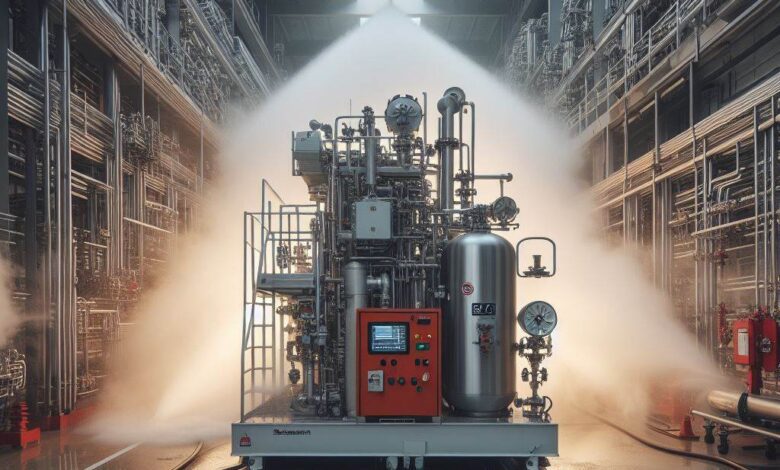
A water mist system is an advanced special hazard solution that uses small water droplets to control, suppress, or extinguish fires. The system works by discharging high-pressure water through specialized nozzles that atomize the water and create a fine mist. When it comes to fire protection, traditional sprinkler systems have been used for a long time as the preferred method of containment and suppression. However, in recent years, water mist systems have begun to gain traction due to their superior fire suppression capabilities and versatility.
Benefits of using a water mist system
Reduced water damage:
Due to the smaller water droplets, water mist systems use less water overall, minimizing damage to sensitive equipment and materials.
Effective against various fires:
Can be used on a wide range of fires, including Class A (ordinary combustibles), B (flammable liquids), and sometimes C (electrical equipment).
Where are water mist systems commonly used?
Data centers, Power plants, Aircraft hangars, Server rooms, Museums, and Cleanrooms.
Service, Maintenance & repair
Service
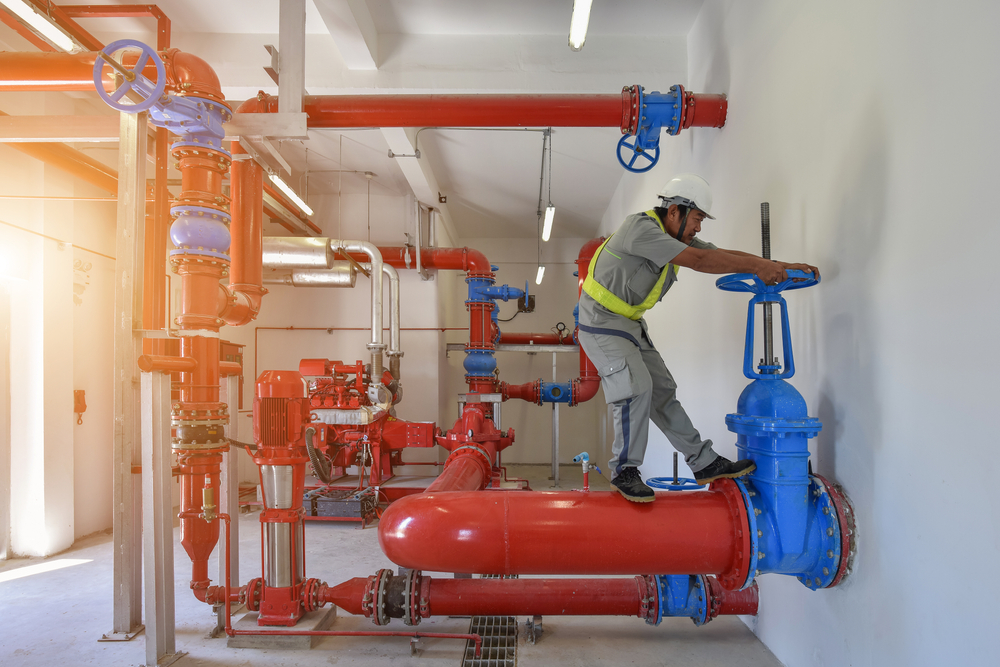
Regular monitoring of signaling and extinguishing systems and their maintenance are important preventive measures in order to permanently ensure functionality. Our service ensures a proper and timely execution for all Fire Detection and Protection systems.
Maintenance & repair
Fire Detection and Protection systems are complex safety systems, which must be absolutely reliable in case of emergency. Regular maintenance and repairs are the prerequisite for ensuring that not only the function but also the insurance protection of your company is ensured.
Fire Alarm Servicing
Fire Systems does Service and Maintenance Contract is a cost-effective way of managing your maintenance visits on your fire alarm system, and gives you peace of mind that your equipment will work when it is needed most - in the event of a fire. Fire alarm servicing needs to be carried out by a competent person with specialist knowledge of fire alarm systems and in depth of the fire alarm system servicing guidelines. We suggest routine Fire Alarm maintenance of your Fire Alarm System at every six month or quarter, as required by the customers own risk assessment, Fire Systems provide a 24-hour 365-day emergency call-out service. As a Company we aim to meet the needs and requirements of all our customers, working in partnership, offering best practice advice, and ensuring that life safety systems meet all legislative requirements and carry out the functions which are designed for – providing safety for life.